Key Takeaways
- Reinforce the frame first. Strike plates fixed with roughly 3-inch screws into the stud resist kick-ins far better than trim-deep screws.
- Choose a graded deadbolt (ANSI/BHMA Grade 1 or 2) with a full 1-inch throw for exterior doors.
- Smart locks are convenient; judge them by grade, override cylinder, battery behavior, and how you remove access.
- Rekey when you move in. It's usually the most economical way to make old keys useless.
- Keyed alike works best when locks share a brand and keyway.
Start With the Frame: Strike Plates and 3-Inch Screws
When a door is kicked in, the lock rarely fails. What fails is the thin wooden jamb around the strike plate — the metal plate on the frame that the bolt slides into. On many homes, the strike is held by two short screws that bite only into that jamb. A firm kick splits the wood and the door swings open with the bolt still extended.
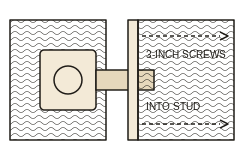
- Replace strike screws with long ones — about 3 inches — so they pass through the jamb and the shim space into the framing stud. Do this for the deadbolt strike and the latch strike.
- Use a reinforced or "high-security" strike with four or more screw holes and a deeper box, if the door frame allows it.
- Don't over-tighten on a door with large shim gaps — you can pull the jamb out of alignment. Snug, then check the bolt still slides freely.
- Do the hinges too. On an outswing door or a weak frame, replacing one screw per hinge with a long screw ties the hinge side to the stud.
- Consider a door-frame reinforcement kit — metal plates that wrap the jamb and edge of the door — for doors that have been forced before.
If you rent, ask your landlord first. If you're unsure about pilot holes, the jamb, or a metal door frame, a locksmith or handyperson can do this in under an hour.
Choosing a Deadbolt
A deadbolt is a bolt moved only by a key or thumbturn, so it can't be pushed back with a card the way a spring latch can. For a door to the outside, look for:
- ANSI/BHMA Grade 1 or Grade 2. The grade is a tested measure of strength and durability. (See How Locks Work.)
- A full 1-inch bolt throw, so the bolt sits deep in the strike.
- A hardened bolt insert or rotating bolt pin, which resists sawing.
- A cylinder with security pins, or a UL 437 listing if key control and attack resistance matter to you.
- Single vs. double cylinder: a double-cylinder deadbolt needs a key on both sides. It can stop someone reaching through broken glass, but it can slow escape in a fire. Many local fire and building codes restrict them on residential exits — check yours and never leave the key out of reach.
Smart Locks: What to Weigh
Smart locks replace or retrofit the deadbolt so you can open it with a code, phone, fob, or voice assistant, and many keep an audit log. They are genuinely useful for families, rentals, and anyone who's tired of hiding a key. They also add new questions.
| Question | Why it matters |
|---|---|
| What BHMA grade is the bolt and housing? | Electronics don't make a bolt stronger. |
| Is there a key cylinder, and how good is it? | A weak override cylinder is a back door. |
| What happens when batteries die? | Look for low-battery warnings and an external emergency power option or key. |
| Wi-Fi, Bluetooth, Z-Wave, Zigbee, or Matter? | Affects range, hub requirements, and battery life. |
| How are users and codes added and removed? | Removing a former tenant, cleaner, or ex-partner should be instant. |
| Does it support two-factor authentication on the account? | The app account is now a key. |
| Does it auto-lock, and can you disable it? | Convenient, but test it so you don't lock yourself out. |
Keypad hygiene matters as much as hardware: use codes of more than four digits where supported, give each person their own code so you can delete just one, and wipe the keypad occasionally so worn buttons don't reveal the digits.
Rekeying When You Move In
When you buy or rent a home, you inherit every key the previous occupants, their relatives, contractors, real-estate agents, and dog walkers ever made. You can't collect them, so the only reliable answer is to change the keying.
Rekeying changes the inside of the cylinder: the technician removes the plug, takes out the key pins, and installs new pins that match a new key. Old keys stop working; the lock body, finish, and hardware stay. It typically costs less than new hardware and takes minutes per cylinder.
While the cylinders are open, it's a good moment to key them alike — set the front door, back door, and garage entry to one key. That works when the locks share the same keyway (often meaning the same brand). Mixed brands may need one or two cylinders replaced to match.
Renters: many leases forbid changing locks, and landlords need access. Some states require landlords to rekey between tenants; in Texas, for example, the Property Code requires a landlord to rekey within seven days after each tenant turnover, and tenants may request additional rekeying at their own expense.
Rekey or Replace? The Interactive Guide
Answer five questions for a qualitative recommendation. It doesn't produce a price — that depends on your city, the time, and your hardware — but it will tell you which conversation to have with a locksmith.
When rekeying is the right call
- Locks work smoothly and you like how they look.
- The goal is making old keys useless — after a move, a lost key, a departed roommate.
- You want several existing locks to use one key and they share a keyway.
When replacing makes more sense
- A lock is damaged, forced, sticky despite servicing, or won't latch.
- It's an ungraded or Grade 3 lock on an exterior door.
- You want a feature the old lock can't offer: restricted keys, UL 437 cylinder, smart access, or a better finish.
Beyond the Front Door
- Sliding patio doors: add a secondary lock or a bar in the track, and anti-lift blocks or screws in the upper track.
- Garage entry doors: treat the door from the garage into the house like an exterior door — deadbolt and long strike screws.
- Windows: working latches, and secondary locks or limiters on ground-floor windows.
- Lighting and visibility: motion lights and trimmed shrubs near entries make doors less attractive targets.
- Spare keys: skip the fake rock. A coded lockbox, a trusted neighbor, or a keypad lock is safer.
A Weekend Upgrade Plan, in Order
- Saturday morning: walk every exterior door. Note the lock brand, whether a deadbolt exists, and how long the strike screws are (remove one to see).
- Saturday afternoon: install 3-inch strike and hinge screws on every exterior door. This is the highest-value hour of the weekend.
- Sunday: replace any ungraded or Grade 3 deadbolts on exterior doors, buying the same brand so they can share a key.
- Monday: book a rekey and keying-alike for all exterior cylinders in a single business-hours visit, so you pay one service call.
- Later: add a smart lock where convenience matters most — usually the door your household actually uses daily.
Questions Readers Ask
Why do strike plate screws matter so much?
Most forced entries on residential doors break the frame, not the lock. The short screws that come with many strike plates only reach the thin door jamb. Screws about 3 inches long reach the wall framing behind it, so the bolt is anchored to the structure rather than to trim.
Should I rekey or replace locks after moving into a house?
Change the keying either way, because you can't know how many copies of the old keys exist. Rekey if the locks work well and you like them; replace if they are worn, damaged, low grade, or you want features like a smart lock or restricted keys.
Can I rekey my own locks?
Some brands sell locks that the owner can rekey with a tool and a working key, and rekeying kits exist for common cylinders. It requires care with small parts. A locksmith can do it quickly and can also key several locks alike.
Do renters need permission to change locks?
Usually yes. Many leases forbid changing locks without the landlord's consent, and the landlord typically needs a key. Some states require landlords to rekey between tenants; Texas, for example, requires rekeying within seven days after a tenant turnover.
Sources
- Builders Hardware Manufacturers Association — ANSI/BHMA grades and certified products: buildershardware.com
- UL Standards & Engagement — UL 437, Standard for Key Locks: shopulstandards.com
- Texas Property Code § 92.156 — rekeying after tenant turnover: statutes.capitol.texas.gov
- U.S. Fire Administration (FEMA) — home fire escape planning: usfa.fema.gov
- Federal Trade Commission — "FTC Urges Consumers to Use Caution When Seeking a Locksmith": ftc.gov